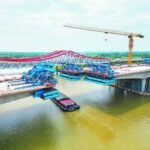
Lucky Knot Bridge at Meixi Lake in the city of Changsha is a fine example of modern Asian architecture. The bridge has been featured on CNN and is one of the top ten most recognizable bridges in the world. The bridge was designed for pedestrians and tourism to bolster the surrounding recreational parks. This video was shot in the middle of the Changsha winter and offers a quick all to know guide about the bridge.
The Lucky Knot Bridge in Changsha, China, is a striking 185-meter-long (606 feet) red pedestrian bridge spanning the Dragon King Harbour River in the Meixi Lake district. [1, 2]
Opened in late 2016, the bridge was designed by the international NEXT architects. [1, 2]
Design and Concept
- Möbius Strip: The shape uses the mathematical principle of an infinite Möbius ring, creating continuous, looping pathways that rise and fall.
- Chinese Folk Art: It is modeled after traditional decorative Chinese knots, which symbolize luck, fortune, and prosperity.
- Bright Red Color: The bold red finish represents good fortune and makes the structure stand out as a public landmark. [1, 2, 3, 4, 5, 6]
Function and Views
- Multi-Level Connection: The bridge connects multiple elevations, linking the river banks, nearby roads, and elevated parks.
- Sightseeing: Pedestrians get panoramic views of the Dragon King Harbour River, Meixi Lake, surrounding mountains, and the city skyline. [1]
Watch this short video clip showcasing the unique curves and red structure of the Lucky Knot Bridge:
The Lucky Knot Bridge in Changsha, China, crosses the Dragon King Harbor River and connects the city’s road, park, and river. It is 185 meters long and has a wavy design inspired by Chinese knots, which stand for luck and good fortune. The bridge has three pathways and offers great views of the river, Meixi Lake, and the city.